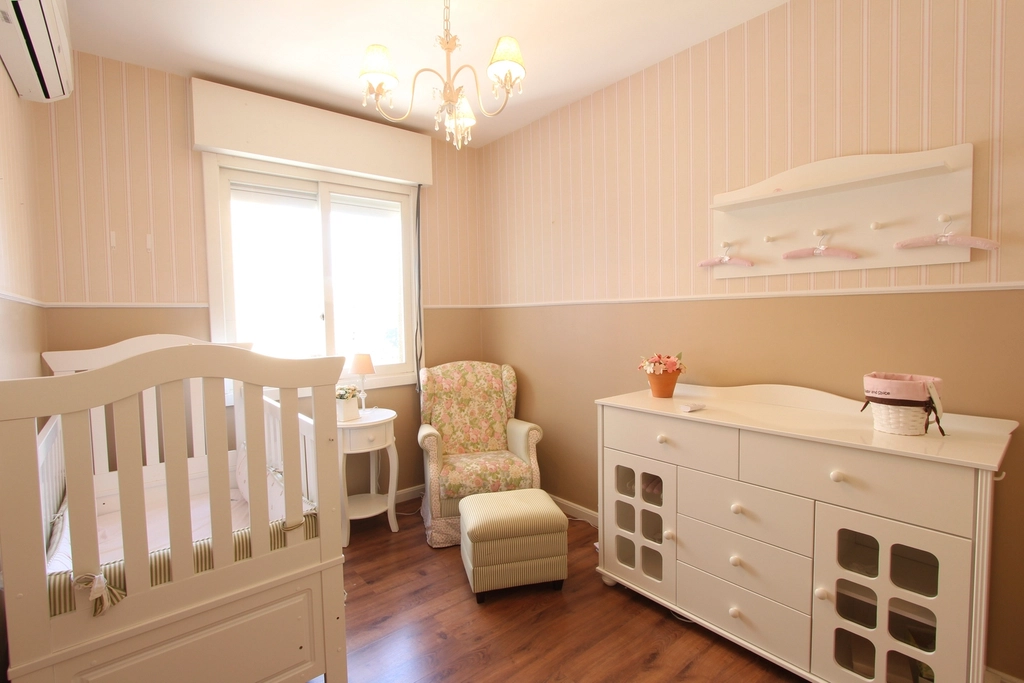
A climbing child can pull a dresser or a TV down in seconds. Anchoring takes a few minutes and very little money.
What to remember
- Dressers and similar furniture made since September 1, 2023, must meet a federal stability standard under the STURDY Act.
- Older furniture and TVs may not be stable, so anchor them to the wall.
- Place TVs on low, sturdy furniture and secure them with anti-tip straps, or mount them on the wall.
- Keep toys and remote controls off high surfaces so children aren’t tempted to climb.
To a toddler, an open drawer looks like a step and the top of a dresser looks like a shelf worth exploring. When a child climbs or pulls on furniture, the weight shifts forward and the whole piece can fall.
Why tip-overs happen
- Children use open drawers as steps.
- Heavy items, especially TVs, sit on top of furniture that wasn’t designed to hold them.
- Several drawers are pulled out at once, moving the weight forward.
- Furniture stands on carpet, which makes it less stable than on a hard floor.
The U.S. Consumer Product Safety Commission runs its “Anchor It!” campaign because these accidents keep happening in ordinary homes.
What the STURDY Act changed
A federal law, the STURDY Act, led to a mandatory stability standard for clothing storage furniture, based on the industry standard ASTM F2057-23. It applies to dressers, chests and similar units made since September 1, 2023.
The tests are meant to reflect real homes: open and filled drawers, carpeted floors and the weight of a climbing child of up to 60 pounds. New units must also include a tip-over warning label.
Good to know: The standard applies to furniture made since September 2023. A dresser you already own, or one bought secondhand, may not meet it. That’s another reason to anchor everything.
How to anchor furniture
- Use the kit in the box. New dressers come with anti-tip hardware. If yours didn’t, hardware stores sell inexpensive furniture straps and brackets.
- Fix into a wall stud if you can. A stud gives the screw something solid to grip. In drywall without a stud, use anchors rated for the job.
- Load the bottom drawers. Put heavier things low down so the weight stays near the floor.
- Add drawer stops if needed. They stop drawers from sliding all the way out.
Securing TVs
Flat-screen TVs are top-heavy and light enough to pull over. Mount the TV on the wall following the mount’s instructions, or place it on a low, sturdy stand designed for TVs and secure it with anti-tip straps. Avoid putting a TV on top of a dresser.
Older, heavier tube TVs are a particular danger. If you still have one, move it to low furniture and strap it, or recycle it.
Parent tip: Don’t leave remote controls, toys or snacks on top of furniture or the TV stand. They’re exactly what a child climbs up to reach.
The rest of the room
Setting up a nursery? Our guide to crib safety and safe sleep covers the crib itself. And if a piece of furniture or a TV stand you own has been recalled, see what to do about a recall.
Parents also ask
Do I still need to anchor a new dresser that meets the standard?
Yes. The standard makes dressers more stable, and they come with anchoring hardware for a reason. Using it adds a second layer of protection.
Which furniture does the STURDY Act standard cover?
Clothing storage units such as dressers, chests and wardrobes that are at least 27 inches tall, weigh at least 30 pounds and have at least 3.2 cubic feet of enclosed storage.
Can I anchor furniture in a rental home?
Ask your landlord first. Anchoring usually means a couple of small screw holes in the wall, which are easy to fill when you move out, and many landlords allow it for safety.
This guide is general information for U.S. shoppers, not legal advice. Safety rules and store policies change, so follow the product’s instructions and labels and check official sources such as CPSC.gov, NHTSA.gov and FTC.gov.