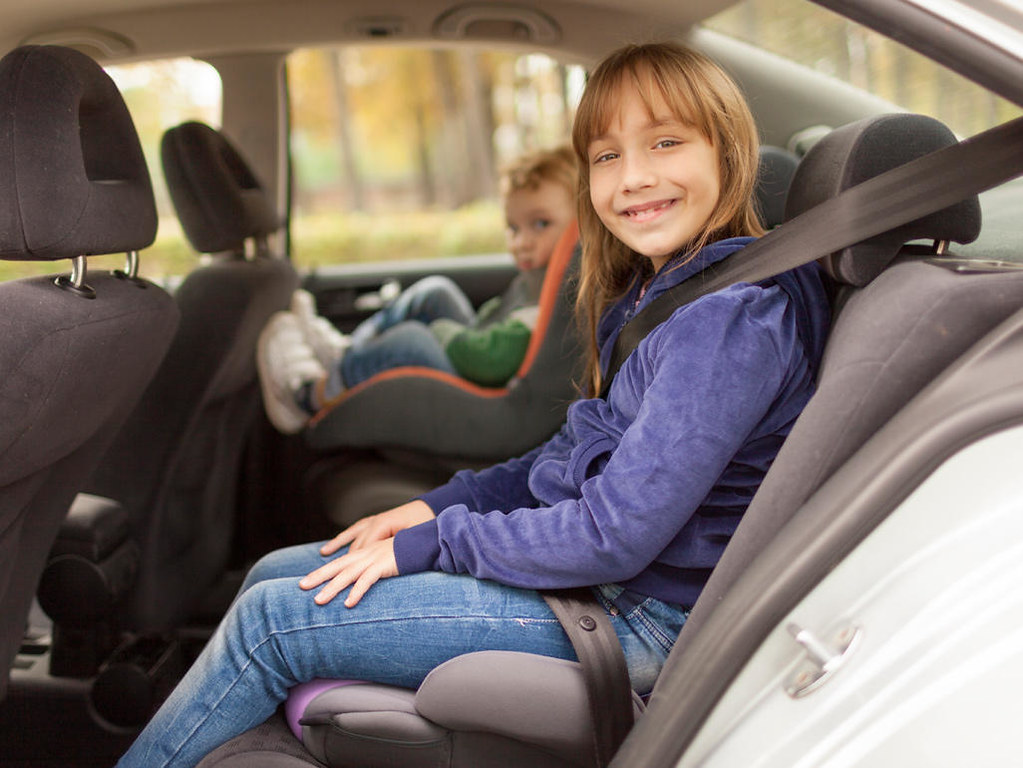
Car seats are sorted by stage, not by age alone. The right one depends on your child’s height and weight, and on how well it fits your car.
What to remember
- Keep children rear-facing for as long as their seat’s height and weight limits allow.
- Move up a stage when your child outgrows the current seat, not because of a birthday.
- Register every car seat with its manufacturer so you hear about recalls.
- Children 12 and under are safest in the back seat.
Shopping for a car seat feels complicated because there are so many models. The choice gets simpler once you know which stage your child is in and what to check before you buy.
The four stages
| Stage | Who it’s for | Move on when |
|---|---|---|
| Rear-facing car seat | Babies and toddlers | They reach the seat’s rear-facing height or weight limit |
| Forward-facing seat with harness | Children who have outgrown rear-facing | They reach the harness height or weight limit |
| Booster seat | School-age children | The adult seat belt fits without it |
| Seat belt | Older children | They’re big enough for the belt to fit properly |
The National Highway Traffic Safety Administration (NHTSA) recommends keeping children in each stage for as long as the seat allows. Rear-facing is the safest way for young children to ride, so there’s no prize for turning a seat around early.
Many seats cover more than one stage. A convertible seat starts rear-facing and later turns to face forward, and an all-in-one seat can go from rear-facing all the way to a booster. Infant-only seats clip into a base and are outgrown sooner.
How to tell the seat belt fits
A booster lifts your child so the adult belt sits where it should. Your child is ready to ride without one when:
- the lap belt lies snugly across the upper thighs, not the stomach
- the shoulder belt crosses the shoulder and chest, not the neck or face
- they can sit with their back against the seat and knees bent at the edge of it for the whole trip
The American Academy of Pediatrics notes that most children need a booster until they’re about 4 feet 9 inches tall, which is often between 8 and 12 years old.
Before you buy
- Check the limits. Look at the height and weight range on the label and box. A seat with higher rear-facing limits lets your child stay rear-facing longer.
- Check the fit in your car. Some seats are too wide or too upright for certain back seats. Ask whether you can try the seat in your car before you commit.
- Think about daily use. If the seat will move between cars, an easier installation matters. A seat installed loosely loses much of its protection.
- Register it. Fill in the registration card in the box or register online with the manufacturer.
Parent tip: Registering your car seat is how the manufacturer reaches you about a recall. You can also search for recalls by brand and model on NHTSA.gov at any time.
Getting the installation right
Read both manuals: the car seat’s and the section on child seats in your vehicle’s owner’s manual. Use either the lower anchors (LATCH) or the seat belt to install the seat, as the instructions direct, and attach the top tether for forward-facing seats.
Even careful parents get details wrong, which is why free inspections exist. A certified technician will check the installation and show you how to do it yourself.
Safety alert: Never place a rear-facing car seat in front of an active passenger airbag. If the airbag deploys, it can strike the back of the car seat with great force.
Hand-me-downs and recalls
A used car seat can be risky if you don’t know its history, including whether it has been in a crash. Read what to check on secondhand baby gear before accepting one, and see what to do when a product you own is recalled if you get a recall notice.
Parents also ask
Do car seats expire?
Many do. Manufacturers set a useful life for each seat, usually shown on a label or molded into the plastic shell. The manual tells you where to look.
Is a more expensive car seat safer?
Every car seat sold in the U.S. has to meet the same federal safety standards. A higher price can buy extra padding or easier installation, but the safest seat is the one that fits your child and your car and is installed correctly every time.
Where can I get my installation checked?
Certified child passenger safety technicians check car seats at inspection stations across the country, often for free. NHTSA’s website has a locator.
This guide is general information for U.S. shoppers, not legal advice. Safety rules and store policies change, so follow the product’s instructions and labels and check official sources such as CPSC.gov, NHTSA.gov and FTC.gov.